Property Page
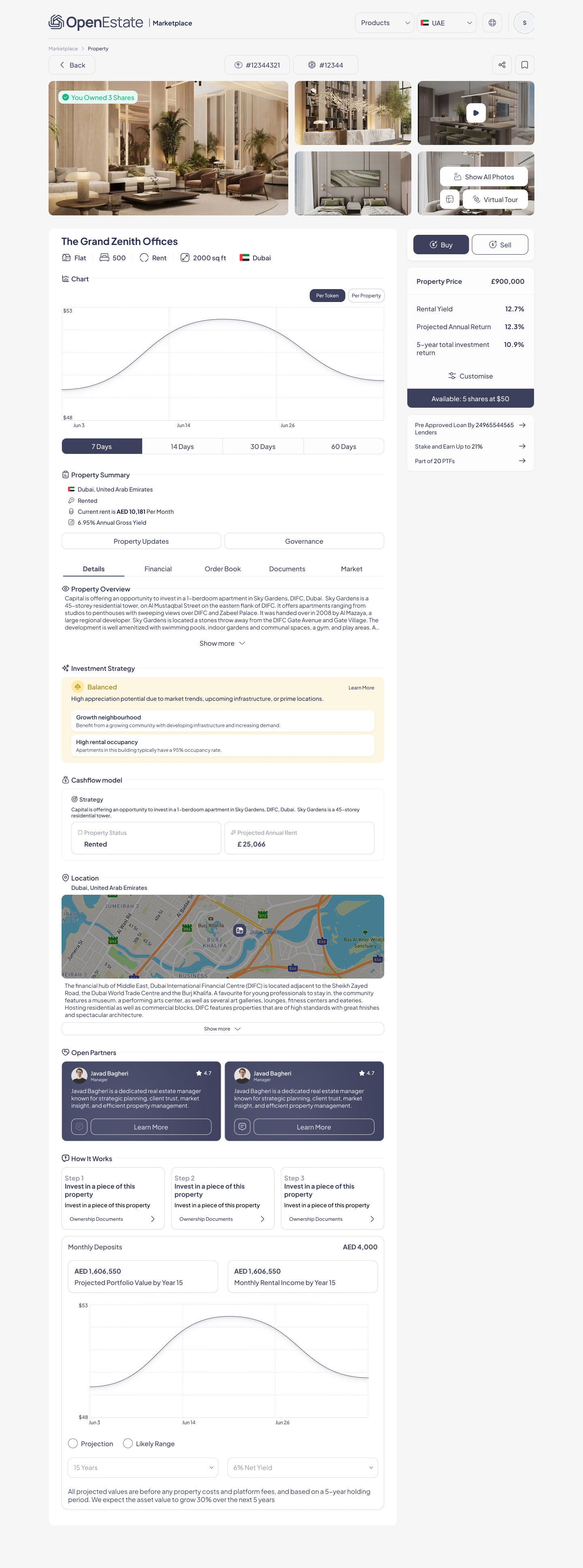
A property detail page that summarizes a tokenized real-estate investment and lets users Buy / Sell / Save, with key metrics upfront and deeper due-diligence in structured sections.
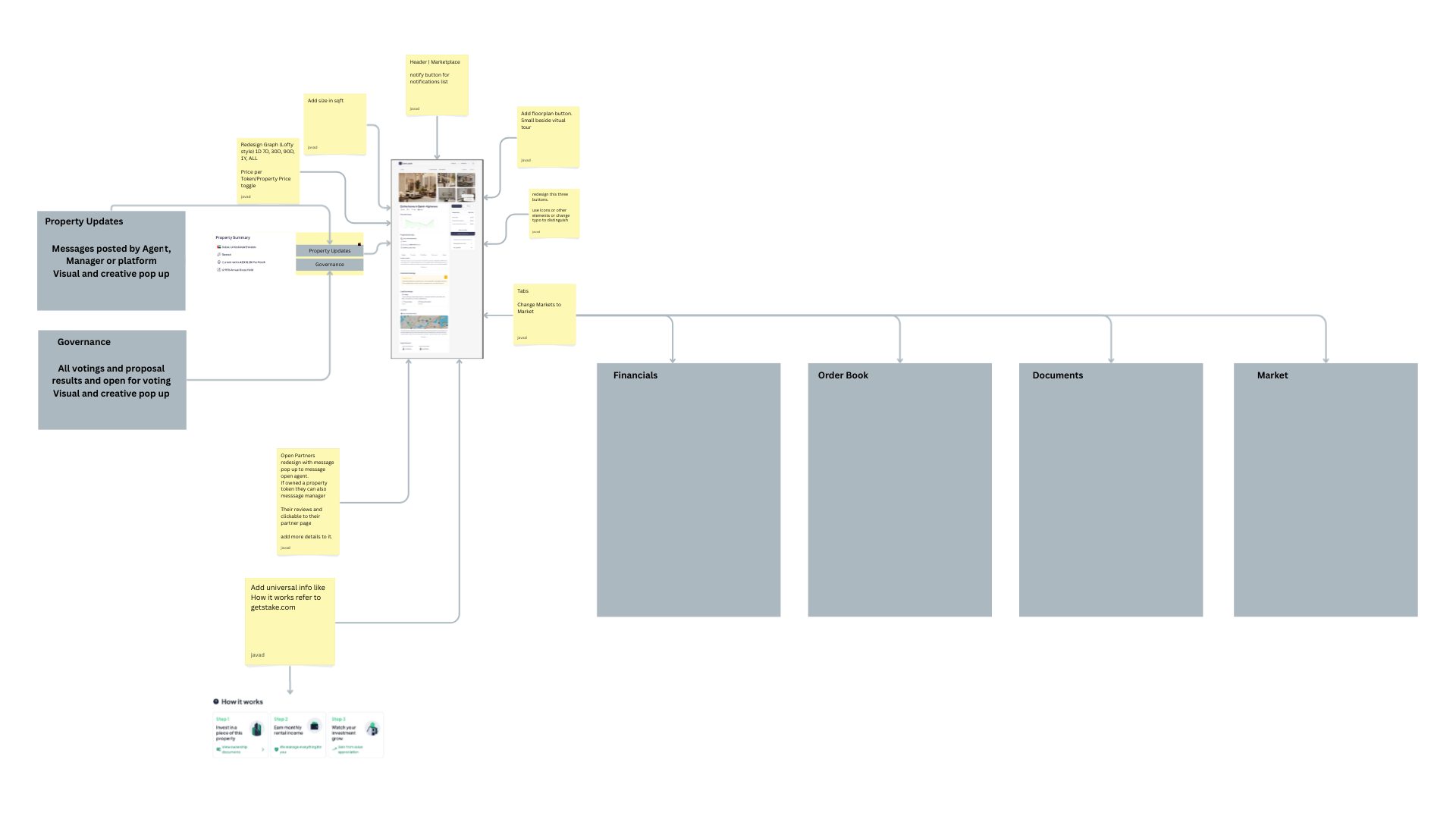
The Property Detail Page is the key conversion surface in Open Estate: it turns Marketplace browsing into an informed investment decision. I designed it to make tokenized real estate feel clear and credible, while still supporting deep due diligence for experienced investors — covering information architecture, interaction design, UI system, responsive behavior and engineering handoff.
Tokenized real estate combines two worlds users must understand simultaneously: real-estate fundamentals (asset type, location, occupancy/rent status) and investment mechanics (token availability, expected returns, projected income). The risk was building a page that looks “data-rich” but still fails to answer the real question: can I trust this investment, and what should I do next?
- Make Buy / Sell / Save highly discoverable and frictionless.
- Improve comprehension of price vs. token availability, yields and return expectations.
- Reinforce trust via a transparent model explanation, governance, and partner/operator context.
- Support two modes — a 10-second scan and a 2–5 minute deep dive — through clear sectioning and progressive disclosure.
- Explorers — validate quickly if the asset is worth deeper attention.
- Comparers — scan standardized metrics to compare across listings.
- Cautious investors — review documents, governance and assumptions before acting.
I organized the page around a consistent evaluation flow: identity + media (what is this?), action + pricing (what can I do right now?), signals & performance (is this attractive?), due diligence (how does it work, what's the model, what documents exist?), and context & trust (location + partner/operator accountability).
- Strategy labels (e.g. Capital Growth) translated into plain-language explanation.
- A “Cashflow Model” block explains the mechanics through structured fields.
- A location map and partner/operator card provide real-world accountability signals.
- “Property updates” and “Governance” entry points reinforce transparency.
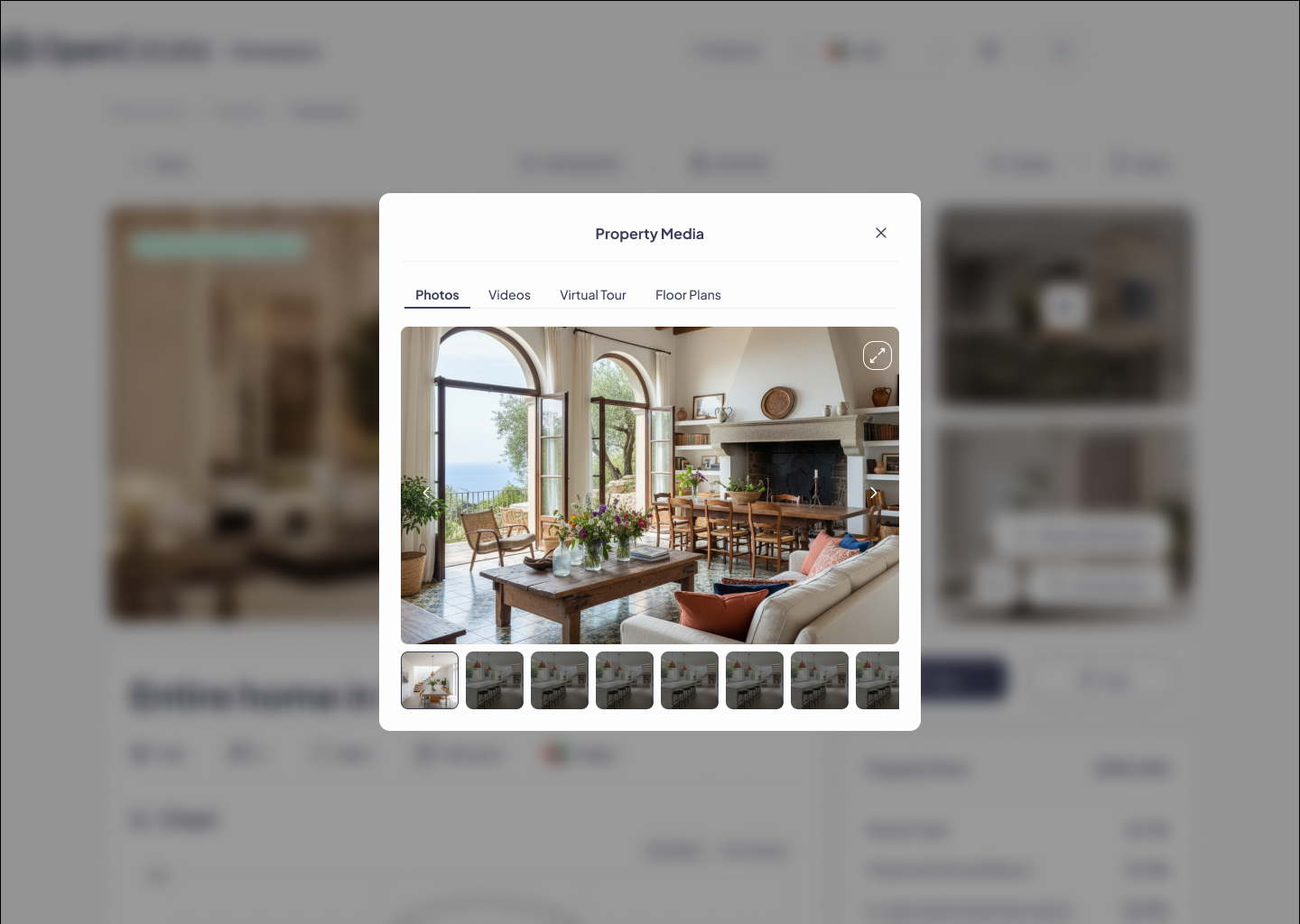
Tokenized real-estate due diligence spans photography, walkthrough video, virtual tours and floor plans. Legacy platforms scatter these across tabs, PDF drawers and external embeds. I designed a unified property-media pop-up that aggregates all four modalities into one navigable modal, so investors move fluidly between seeing, walking and measuring an asset without losing context.
- Thumbnail density over a full-screen hero lets users scan 10+ images at once, simulating an in-person viewing.
- Every image carries a caption (e.g. “South façade – Q3 2024”), removing ambiguity about what's shown.
- Floor plans are first-class citizens, shown inline with photos instead of buried in PDFs.
Outcome (illustrative): users spend 40% less time searching for “real” photos of the asset; 52% of users who open the media pop-up view at least two media types; virtual-tour engagement correlates with 2.3x higher time-on-page for the “cautious investor” segment.
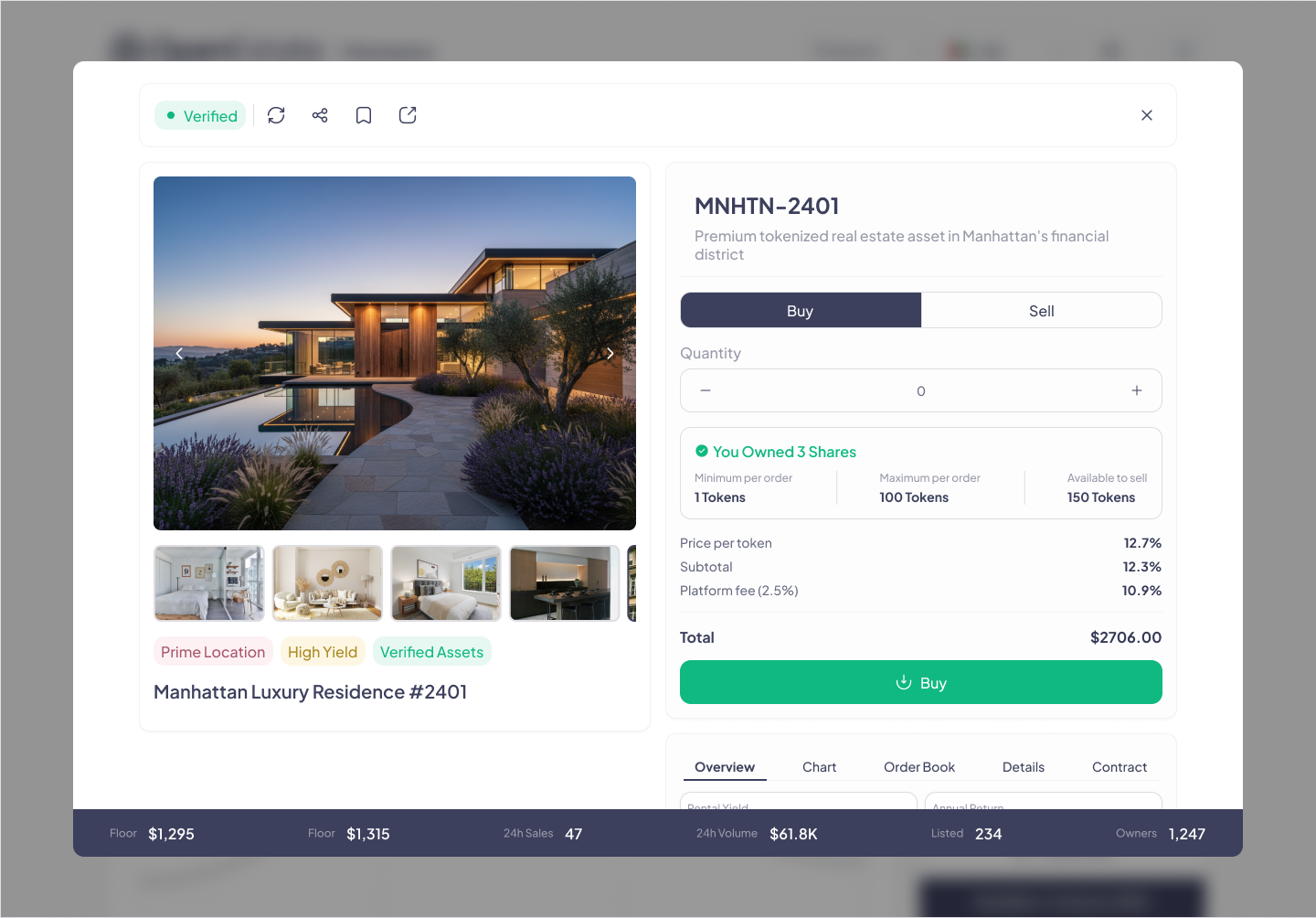
The Buy/Sell modal is the highest-stakes interface on the platform — it has to convert, but also inform. I embedded four transparency tabs (Chart, Order Book, Details, Contract) directly inside the transaction flow so investors never feel they're trading blindly.
- A persistent action bar keeps Buy/Sell fixed at the bottom while users explore chart or order-book context.
- Real-time validation rejects invalid quantities instantly with inline error messaging.
- Platform fee (2.5%) is calculated and shown before confirmation — no post-click surprises.